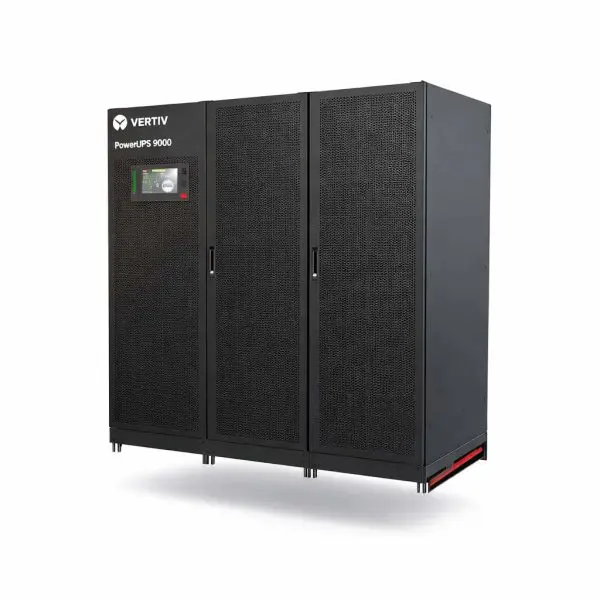
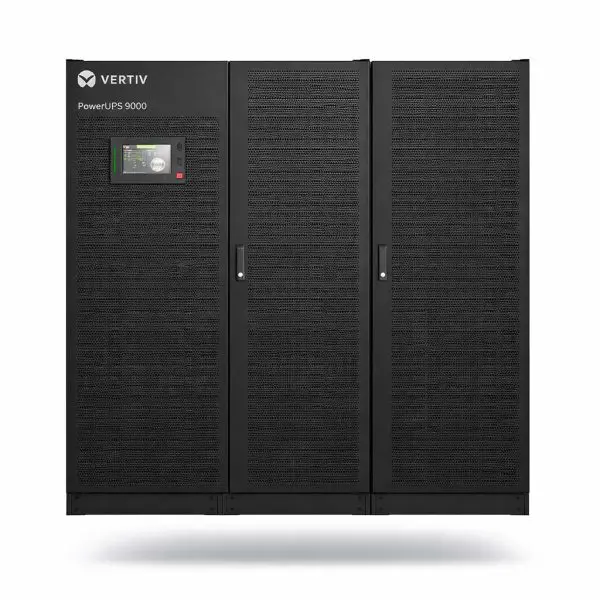
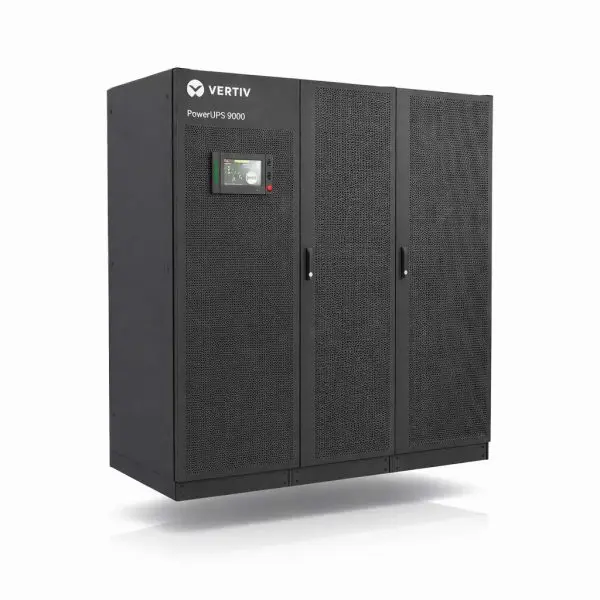
The Vertiv™ PowerUPS 9000 is a high-power density, energy-efficient, compact uninterruptible power supply (UPS) designed to support IT loads from traditional computing through high-density applications, including space-constrained environments. Available globally in UL and CE models from 250 to 1250 kVA/kW, it delivers premium protection with a footprint engineered for modern data center ROI.
As Vertiv’s most efficient UPS in its product class, PowerUPS 9000 delivers double-conversion efficiency up to 97.5% for superior reliability while providing a physical footprint that is 32% smaller than previous generations. It scales using 125 kVA power modules so you can grow capacity as construction progresses and real load demand increases. The platform supports multiple backup energy sources, including compatibility with the Vertiv™ EnergyCore lithium battery cabinet, as well as VRLA and Nickel-Zinc technologies.
Key Features & Benefits
No Interruptions Serviceability — Hot, easy serviceability enables maintenance and power upgrades without downtime or load interruptions.
Scalable 125 kVA Power Modules — Customizable modular architecture scales quickly to match construction progress and real load demand.
Double-Conversion Efficiency up to 97.5% — High efficiency improves reliability and reduces operating costs.
32% Smaller Footprint — Higher power density in less floor space versus previous generations for stronger facility ROI.
Energy Source Integration — Supports lithium-ion (EnergyCore), VRLA, and Nickel-Zinc for flexible runtime and lifecycle strategies.
Rich Digital Experience — Optional Vertiv™ LIFE™ monitoring enables lifecycle visibility and service empowered by data.
Wide Input Voltage Range — Reduces battery cycling and helps prevent premature aging-related replacement.
Design Reliability Tooling — Dedicated segregated controls plus enhanced diagnostics (Waveform Capture, History Log) and verification/validity tests.
Complete Service Packages — In-depth support options throughout the UPS lifecycle for optimal long-term performance.
Product Snapshot
Feature
Specification
Capacity Range
250–1250 kVA/kW (model dependent)
Architecture
Modular UPS with scalable 125 kVA power modules
Efficiency
Up to 97.5% (double-conversion)
Power Density
Footprint up to 32% smaller than previous generations (class dependent)
Hot-swappable modules for seamless maintenance and upgrades
Input Characteristics
Wide input voltage range to reduce battery usage and aging
Digital / Monitoring
Optional Vertiv™ LIFE™ monitoring (lifecycle data + remote visibility)
Diagnostics
Waveform Capture, History Log, verification/validity tests
Why Choose the PowerUPS 9000?
Grow fast without forklift upgrades by scaling in 125 kVA modules as real load demand increases.
Protect uptime during change with hot-swappable modules designed for maintenance and upgrades without interruptions.
Lower TCO and improve PUE with high efficiency and reduced footprint in space-constrained facilities.
Choose the right battery strategy with support for lithium, VRLA, and Nickel-Zinc technologies.
Applications
Ideal for data centers, colocation, hosting and cloud, and high-density IT environments where power density, efficiency, and non-disruptive serviceability are essential—especially in space-constrained electrical rooms.