Products

Call Now For Support
1-800-658-5883

Humanoid Robots: How are they Stepping Out of Science Fiction and Into Our Lives

3 Humanoid Robots

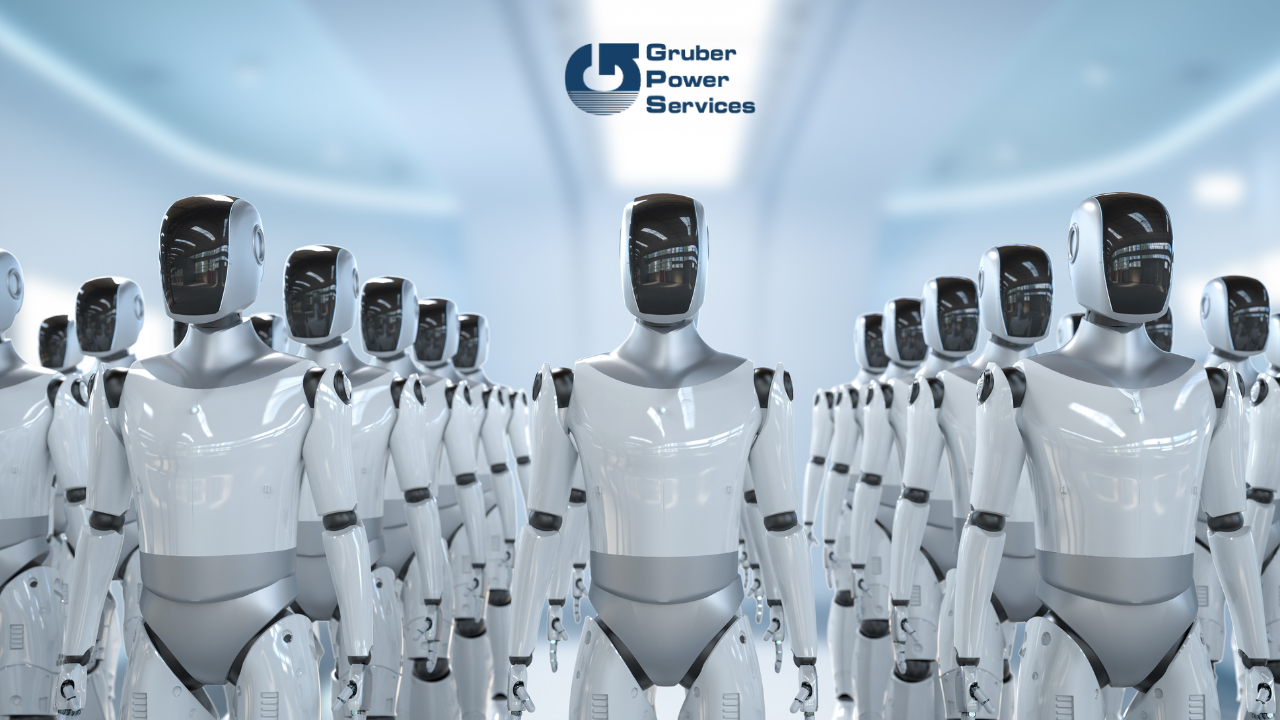
A large group of identical, white, robotic humanoids standing in a well-lit, futuristic room. The logo for Gruber Power Services is displayed prominently at the top center of the image.

The Humanoid Robots

For centuries, the concept of a walking, talking machine in the shape of a person has captivated the human imagination. From the golden handmaidens crafted by the Greek god Hephaestus to the mechanical knight envisioned by Leonardo da Vinci, the dream of the automaton has been a constant presence in myth and invention. Today, that dream is rapidly becoming reality.

Humanoid robots, machines designed to resemble the human body and interact in environments built for us, are no longer just a staple of science fiction. They are on the verge of transforming our industries, our homes, and our very definition of work and life.

How Humanoid Robots Work: A Quick Breakdown

So, how do these human-shaped marvels work? The function of a humanoid robot is a triumph of engineering that perfectly fuses hardware and intelligence. At its core, the robot is a complex mechatronic system: its “muscles” are powerful actuators (electric motors or hydraulics) connected to joints with a high number of degrees of freedom (DOF) to mimic human dexterity. A central control system governs this entire mechanical structure, the robot’s “brain,” which processes continuous input from an array of sensors, cameras for sight, microphones for hearing, and specialized force/torque sensors (including IMUs) for balance.

The real magic happens when advanced AI and machine learning algorithms use this sensory data to calculate the next move, maintain dynamic stability through bipedal walking, and translate abstract commands into precise physical actions, all in real-time. This sophisticated interplay of sensing, computing, and motion control allows the robot to navigate and operate effectively in the unstructured, human-centric world.

What are the main benefits of using a humanoid robot?

The unique, human-like form of humanoid robots offers several key benefits, allowing them to transform various industries and aspects of daily life.
  1. Enhanced efficiency and Productivity
  • 24/7 Operation: Unlike human workers, robots can work continuously without any breaks, rest, or fatigue, maximizing uptime and increasing production output.
  • Precision and Consistency: Equipped with advanced sensors and algorithms, humanoid robots can perform repetitive or complex tasks with high accuracy and consistency, minimizing errors and reducing waste.
  • Automation of Mundane Tasks: They can take over repetitive, monotonous, or physically demanding tasks, which frees human employees to focus on higher-value activities that require creativity, critical thinking, and problem-solving.
  1. Improved Safety and Environment Adaptability
  • Hazardous Environments: Humanoid robots can safely perform tasks in environments that are dangerous for humans, such as areas with high radiation, extreme temperatures, toxic materials, or unstable structures (e.g., disaster relief, space exploration, mining).
  • Workplace Safety: By handling heavy lifting and hazardous machinery, they reduce the risk of workplace injuries and accidents for human workers
  • Designed for Human Environments: Because they are shaped like humans, they can navigate and operate in existing infrastructure (factories, warehouses, homes, public spaces) that was built for people, such as climbing stairs, opening doors, and using human-designed tools and equipment.
  1. Versatility and Human -Robot Interaction:
  • Versatility and Dexterity: Their human-like arms and hands provide a high degree of dexterity, allowing them to perform a wide range of complex manual tasks.
  • Adaptability: Humanoid robots can be easily reprogrammed and adapted to switch between various tasks as production or service needs change, making them highly flexible assets.
  • Natural Interactions: Their human-like form and capacity to recognize and respond to human social cues make human-robot interaction more intuitive and natural, which is beneficial in service roles like customer assistance, education, and healthcare.
  • Learning by observing: Newer generations of humanoid robots, powered by advanced AI, can learn new tasks simply by observing humans perform them, simplifying the training process.

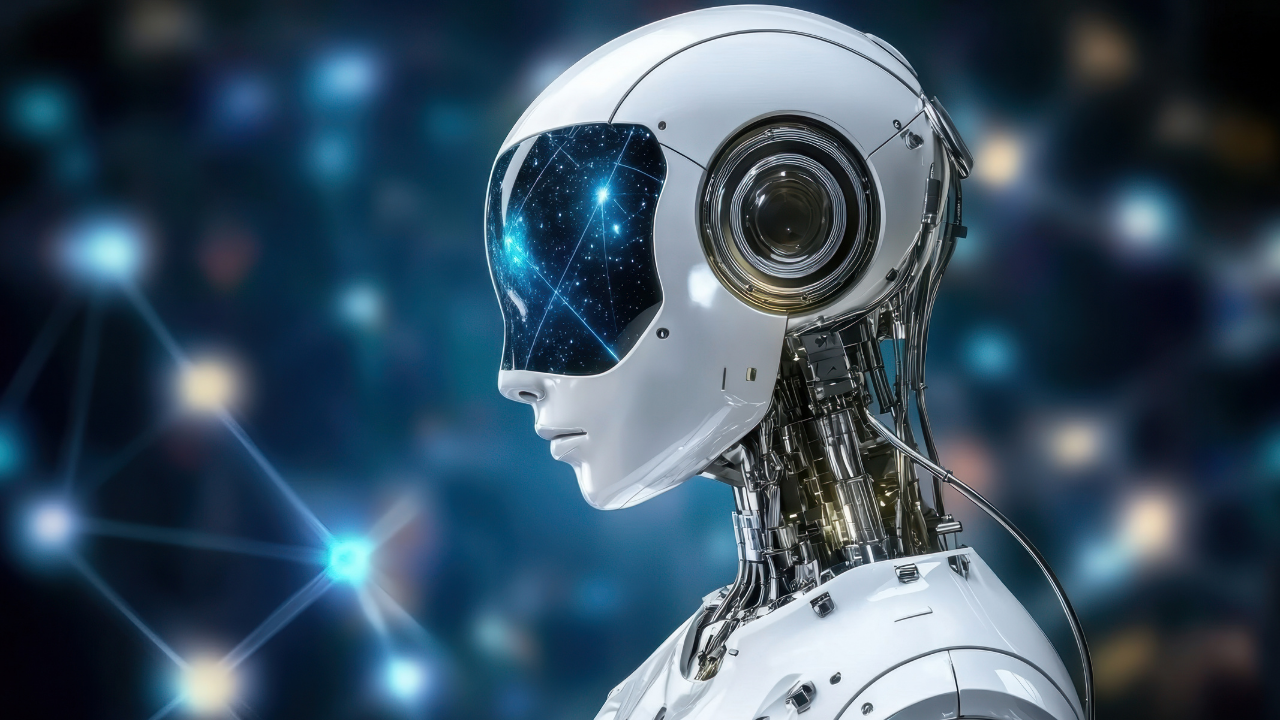
A close-up, profile view of a futuristic, white robotic or humanoid head and neck. Its visor is reflective, showing a starry, blue digital network pattern, and a camera lens is visible on the side of its head. The background is a dark, bokeh blur of blue and yellow lights with connecting digital lines.

What are the key applications of humanoid robots?

Manufacturing and Industrial Automation

  • Assembly and Precision Work
  • Material Handling and Logistics
  • Hazardous Tasks
  • Quality Control and Inspection

Healthcare and Elderly Care   

  • Caregiving for the elderly
  • Physical therapy
  • Hospital Operations
  • Medical Assistance

Service, Retail, and Hospitality

  • Customer support and service
  • Hospitality
  • Personal Assistance

Education and Research

  • Special education
  • Research Programs

Emergency and Disaster Response

  • Detect and locate victims
  • Map and assessment of damage
  • Situational awareness
  • Handling hazardous Materials
  • Debris Removal

Defense and Security

  • Surveillance
  • Autonomous Patrol
  • Threat Detection
  • Tactical support
  • High-Risk Intervention

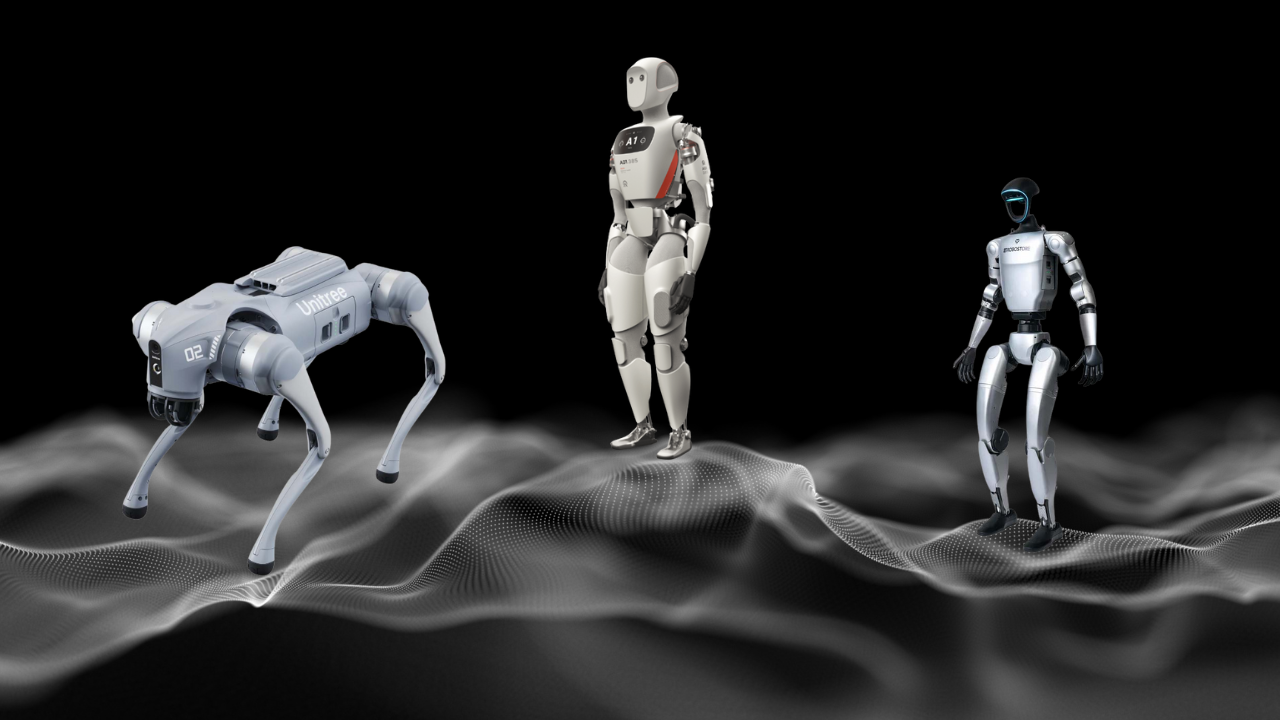
A gray, four-legged Unitree robot dog stands on the left, facing a fully bipedal, white and red humanoid robot in the center. A second, darker-colored humanoid robot stands on the right. All three robots are positioned on a low, wavy, white, dotted digital surface against a plain black background


Humanoids Are Here—Let Gruber Power Service Help You Power the Future Today

Drawing on decades of expertise in both critical power systems and advanced EV engineering, Gruber Power is uniquely positioned to address the full lifecycle needs of humanoid robots.

Our dedicated Robotics Depot and specialized engineering team, combining mechatronics, controls, and AI software development, ensure these advanced platforms remain mission-ready. From component-level repair of complex servo-actuators and meticulous reconditioning of Li-ion power plants to the critical tuning of motion profiles and system-level validation using advanced test equipment, we are dedicated to maximizing robot uptime and performance. By applying our unique legacy of powertrain and DC storage mastery, Gruber Power provides the specialized knowledge and service infrastructure needed to keep the future of humanoid robotics, whether in disaster response or defense, moving reliably.

Ready to maximize your robotics uptime?

Check out our Gruber Power Service: Robotics Humanoids Sales and Service page to explore our full capabilities, or contact us directly.


Related Posts

Gruber Power Services